
Table of Contents
- Why Emotional Pain Feels So Overwhelming
- The Science of Heartbreak Pain
- How Mindfulness Reduces Emotional Distress
- Mindfulness Practices for Emotional Release
- Integrating Mindfulness into Daily Healing
- The Long-Term Benefits
- Conclusion
Why Emotional Pain Feels So Overwhelming
Heartbreak pain can feel unbearable not because you’re “too emotional,” but because your entire nervous system enters a state of shock. The loss of your partner removes a major source of safety, predictability, and emotional regulation.
Without that attachment bond, your body experiences a sudden drop in oxytocin and dopamine — creating feelings of withdrawal, panic, and deep sadness.
This emotional crash is biological, not weakness.
The Science of Heartbreak Pain
Research by Ethan Kross (2011) reveals that heartbreak activates the same neural regions associated with physical pain — specifically the anterior insula and dorsal anterior cingulate cortex.
That’s why heartbreak doesn’t just feel emotional — it feels like a physical wound in your chest, stomach, or throat.
This overlap explains symptoms like heaviness, nausea, tightness, or aching in the body during emotional distress.
How Mindfulness Reduces Emotional Distress
Mindfulness doesn’t remove pain — it removes the extra suffering created by resistance, rumination, and emotional overload.
When you practice mindfulness, you shift from fighting the emotion to observing the emotion, which instantly reduces intensity.
Instead of being swept away by the feeling, mindfulness lets you anchor yourself in the present moment.
This slows the emotional spike, calms your nervous system, and activates the brain’s regulation centers.
Mindfulness Practices for Emotional Release
These simple but powerful practices help release emotional tension instead of bottling it:
1. Emotional Naming
Label the feeling: “This is sadness,” “This is fear,” “This is longing.”
Naming reduces emotional overload by activating the thinking brain.
2. Acceptance Grounding
Acknowledge what you feel without judgment:
“This is here right now, and I can sit with it.”
Acceptance softens resistance.
3. Breath-Anchor Technique
Focus on one slow inhale and exhale at a time.
Your breath becomes a safe place when emotions peak.
4. Self-Soothing Touch
Place a hand on your chest or stomach.
This activates the body’s calming system and reduces emotional tension.
Integrating Mindfulness into Daily Healing
Consistency heals more than intensity. Small daily moments of mindfulness help regulate your emotional system throughout the day:
- Practice for 3 minutes upon waking to anchor your nervous system
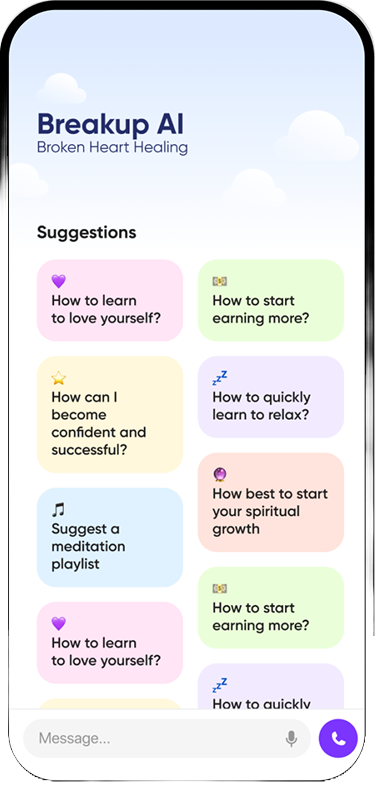
- Use Breakup AI Call during emotional spikes for real-time grounding and co-regulation
- End the day with a 1–2 minute reflection to release accumulated emotional tension
These mini-practices prevent emotional overwhelm before it builds.
The Long-Term Benefits
Long-term mindfulness practice rewires your emotional pathways through neuroplasticity.
Over time, you experience:
- Less reactivity to emotional triggers
- Increased resilience
- A more stable, grounded emotional baseline
- Faster recovery after emotional waves
- Greater clarity and self-compassion
Mindfulness doesn’t just help you survive heartbreak — it strengthens you far beyond it.
Conclusion
You can’t skip the pain — but you can learn to move through it with strength and compassion.
Mindfulness gives you the inner tools to release emotional tension, regulate your nervous system, and heal with clarity instead of chaos.
With consistent practice, you become more grounded, resilient, and emotionally free.