
Table of Contents
- Understanding Emotional Attachment
- Why Breakups Create Attachment Shock
- How AI Can Support Healing
- Using Voice and Chat Tools for Emotional Regulation
- Guided Prompts to Shift Attachment Patterns
- Building Healthy Emotional Independence
- Conclusion
Understanding Emotional Attachment
Emotional attachment isn’t a flaw or weakness — it’s part of human biology and psychology. We form deep bonds with partners through comfort, shared routines, emotional safety, and neurochemical connections. When a breakup happens, your emotional system loses its “safety base,” which can trigger panic, distress, and emptiness. This reaction is not about weakness — it’s your nervous system responding to loss and change.
Why Breakups Create Attachment Shock
Breakups often feel like emotional whiplash because they abruptly disrupt your brain’s predictable bonding patterns. Neurological research shows that heartbreak activates the same reward and withdrawal brain circuits as addiction. That’s why you may experience cravings, obsessive thoughts, anxiety, restlessness, and even physical discomfort after a breakup. Your brain isn’t just missing a person — it’s missing emotional grounding, comfort, and stability.
How AI Can Support Healing
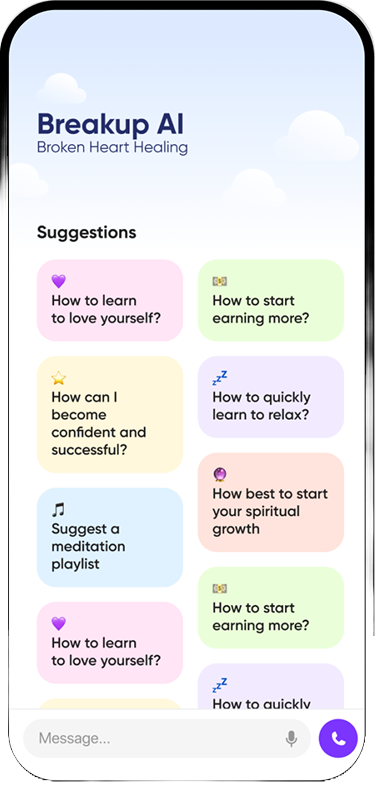
AI-powered emotional support can play a valuable role in recovering from heartbreak — by offering a stabilizing presence when your nervous system feels overwhelmed. Platforms like “Breakup AI” (or similar tools) can provide:
- Instant grounding support during emotional spikes
- Judgment-free listening when you feel isolated
- Evidence-based guidance rooted in psychology and emotional regulation practices
Rather than being trapped in spiraling thoughts, AI acts as an emotional buffer — helping you interrupt distress patterns before feelings intensify.
Using Voice and Chat Tools for Emotional Regulation
Voice-based features, such as calming “Call” tools or audio support, can simulate the sensation of co-regulation — being emotionally soothed by a calm, stable presence. This can rapidly reduce anxiety, lower stress levels, and ease emotional flooding.
Chat-based tools, on the other hand, offer mental clarity when your thoughts feel chaotic or overwhelming. Writing or reading through supportive prompts helps you organize tangled feelings, gain perspective, and take calm, grounded next steps.
Together, voice + chat create a balanced emotional support system: soothing presence + cognitive clarity.
Guided Prompts to Shift Attachment Patterns
Healing post-breakup often involves gently retraining your mind’s habitual responses to emotional triggers. Guided prompts from AI can help you:
- Break compulsive habits like constantly checking social media, messages, or memories
- Reframe painful emotional memories into more balanced, empowering narratives
- Reduce dependency-driven thoughts and emotional reactions
- Replace automatic reactivity with intentional, healthier responses
These prompts act as daily emotional exercises — slowly reshaping attachment patterns and promoting healthier coping habits over time.
Building Healthy Emotional Independence
With consistent use of emotional regulation tools, guided prompts, and grounding support, your internal nervous system gradually learns to stabilize without needing external validation or comfort from a former partner. You begin to rebuild self-trust, emotional resilience, and inner security.
This phase isn’t about suppressing emotions — it’s about cultivating a balanced, secure attachment style that empowers you to regulate feelings, set healthy boundaries, and confidently move forward in life.
Conclusion
Healing from heartbreak isn’t a quick fix — but it doesn’t mean you’re broken. Tools like AI emotional support, guided prompts, and mindful regulation practices offer grounded, evidence-based support to help you process emotions, rebuild resilience, and regain emotional independence — one step at a time.