
Short answer: No contact works very well for what it was designed to do: help you stop hurting, stop obsessing, and get your judgement back. It is not a reliable way to get an ex back. Sometimes an ex does reach out during the silence, but no contact can’t make someone want you, and if winning them back is your only goal, it usually makes the process harder.
Search “does no contact work” and you’ll find two kinds of answers. One says it’s a near-magic technique that makes your ex miss you. The other says it’s manipulative nonsense. Both are selling something, usually a course.
Here’s the honest version, from the perspective of someone who’d rather you actually felt better in 60 days than paid for a “text your ex back” script.
What no contact is actually for
The no contact rule is simple: for a set period, you don’t call, text, message, like, comment, or “accidentally” show up. The reason it works is mostly about your brain, not theirs.
Helen Fisher and colleagues scanned the brains of people who’d recently been rejected by a partner they still loved (Fisher et al., 2010, Journal of Neurophysiology). Looking at photos of the ex activated regions linked to reward, craving, and addiction. In plain terms: early heartbreak behaves a lot like withdrawal. Every text, every profile check, every “just one more conversation” is a small hit that resets the craving.
Other research points the same way. Tara Marshall’s 2012 study in Cyberpsychology, Behavior, and Social Networking found that people who kept checking an ex’s Facebook reported more distress, more longing, and less personal growth than people who didn’t. Contact, even passive contact, keeps the wound open.
So no contact works the way staying away from a bar works when you’re trying to stop drinking. It removes the trigger long enough for the craving to fade.
Does no contact work to get an ex back?
Sometimes an ex comes back during or after no contact. That’s real. But it’s worth being clear about why, and how often it leads somewhere good.
Why exes sometimes reach out
- Your absence is noticeable. If you were the one texting, your silence is a change. Some people reach out just to check they still have access.
- Their own loneliness. A bad week, a breakup with a rebound, a holiday. Nostalgia hits hard when life is quiet.
- Guilt or curiosity. “Are you okay?” texts are often more about the sender’s conscience than a change of heart.
- Genuine reconsideration. Occasionally, distance really does help someone realise they made a mistake.
Only the last one is what most people are hoping for. And from the outside, in a 2am text, they all look the same.
Why “no contact to get them back” tends to backfire
| No contact for yourself | No contact as a strategy |
|---|---|
| Success = you feel calmer and think about them less | Success = they text you |
| Every day without contact is progress | Every day without a message from them feels like failure |
| You check your phone less over time | You check your phone more, waiting |
| A message from them is something to evaluate calmly | A message from them is a prize, and you reply instantly |
| Ends when you feel stable, whatever they do | “Ends” when they reach out, often before you’ve healed |
Strategic no contact keeps your attention on them. You’re still in the relationship, just in a silent version of it. That’s why so many people feel worse on day 25 of “get them back” no contact than they did on day 5.
What the research says about getting back together
There’s no good study on “no contact as a reconciliation tactic.” Anyone quoting a success rate (you’ll see figures like 90%) is making it up or quoting their own customer surveys.
What we do have is research on couples who break up and get back together. René Dailey and colleagues have studied these “on-again/off-again” relationships for years. Their work, including a recent multi-sample study in the Journal of Social and Personal Relationships, links repeated breakups and renewals with higher relational stress and more psychological and physical symptoms. It’s correlational, so it doesn’t prove cycling causes the problems. But it does suggest that getting back together without changing anything tends to recreate the same relationship.
Reconciliation can work. It tends to work when both people have had time apart, understand what went wrong, and come back by choice, not because one person engineered a reaction.
So when does no contact “work”?
Here’s what working actually looks like, roughly in the order people notice it:
- The urge to text gets shorter. It still comes, but it passes in minutes instead of hours.
- You stop checking. Their profile stops being the first thing you open.
- Your sleep and appetite steady. Not perfect, but closer to normal.
- You remember the bad parts too. The highlight reel gives way to a fuller picture.
- Your future stops having their face in it. You can imagine a life that doesn’t revolve around them.
- A message from them would be interesting, not urgent. This is the real sign. You’d read it, think, and decide.
How long that takes varies a lot. For most people it’s weeks to a few months, not days. Our guide to how long no contact should last goes into the timing.
When no contact doesn’t work (and what to do instead)
It’s not a cure-all. It struggles in a few situations.
- You keep breaking it. Short stretches of silence followed by long conversations can actually intensify the craving. If you’ve broken it, don’t restart in shame; read what to do after breaking no contact and tighten the plan.
- You replaced texting with watching. Not texting but checking their Stories 20 times a day isn’t no contact. It’s surveillance, and the Marshall study suggests it carries its own cost.
- You can’t avoid them. Kids, a shared lease, the same office. Then you need a modified version with strict limits on what you talk about.
- You’re isolated. No contact removes a big source of connection. If you don’t replace it with friends, family, routine, and support, the silence can feel unbearable.
- You’re struggling with depression or thoughts of self-harm. No contact is a boundary, not a treatment. Talk to a doctor or therapist. In the US you can call or text 988 any time.
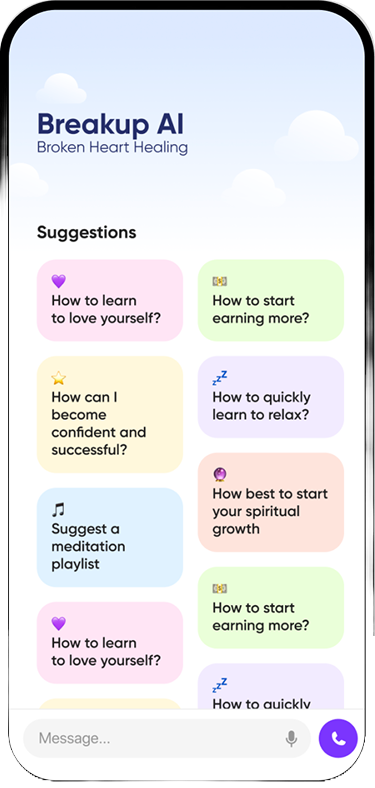
Want to text them “just to see” if no contact is working? Open the SOS button in Breakup AI before you type anything. It walks you through the next few minutes and counts your no-contact days, so you can see your progress instead of testing it.


The honest middle ground if you still want them back
Maybe you read all that and you still want them back. That’s okay. You don’t have to pretend otherwise. Here’s how to hold that wish without letting it run the process.
- Do no contact for you first. Commit to 30 to 60 days where the only measure of success is how you’re doing.
- Write down why it ended, in their words and yours. Not the romantic version. The actual reasons.
- Ask what would need to be different. If nothing changes, getting back together just restarts the same story.
- Decide in advance what you’ll do if they reach out. We cover this in what to do if your ex reaches out during no contact.
- Accept that they might not. This is the hardest part, and the most freeing. If your recovery depends on their choice, you’ve handed them the controls.
Here’s the paradox people discover around week six: once you’re genuinely okay without them, you’re also in the best position to decide whether you want them at all. Plenty of people who started no contact to win someone back end it realising they no longer want to.
Try this tonight: the “what is this for?” check (5 minutes)
- Open your notes app and write: “I’m doing no contact because…” Finish the sentence honestly.
- If the answer mentions them (“so they miss me,” “so they come back”), write a second line: “And for me, it’s so that…”
- Write one sign that would tell you no contact is working that has nothing to do with them. Example: “I fall asleep without checking their profile.”
- Put that sign somewhere you’ll see it, like your lock screen or a widget.
Common myths about no contact
“No contact makes them miss you”
It might. It might not. You can’t control what’s happening in their head, and building your plan around it gives them power over your recovery.
“If they don’t reach out, it didn’t work”
If you feel steadier, it worked. Silence from them tells you about their situation, not your worth.
“No contact is manipulative”
Not taking space after a breakup is not manipulation. Using silence as a calculated tactic to provoke a reaction gets closer to it. The difference is intent: protecting yourself versus playing a game.
“It only works if you do exactly 30 days”
Thirty days is a useful starting commitment, not a magic number. Many people need longer, and it’s fine to extend.
FAQ
Does no contact really work?
Yes, for healing. Staying away from an ex reduces the triggers that keep cravings and rumination going, and most people feel noticeably calmer after a few weeks. It is much less reliable as a way to get an ex back, because you can’t control whether they reach out.
What percentage of exes come back after no contact?
There’s no reliable statistic. Figures you see online usually come from coaches’ own surveys or are invented. Research on couples who break up and reunite exists, but it doesn’t measure no contact as a tactic.
How do I know if no contact is working?
Look at yourself, not your phone. Signs include shorter urges to text, checking their profiles less, steadier sleep, remembering the bad parts of the relationship as well as the good, and feeling that a message from them would be interesting rather than urgent.
Does no contact work on a dumper?
It can make a dumper notice your absence, and some do reach out. But the person who ended things often feels relief at first, so silence may not register for a while. Treat any contact from them as information, not as a sign you’ve won.
Is it bad to do no contact to get an ex back?
It isn’t wrong to hope, but using no contact only as a strategy keeps your focus on them and tends to make the waiting more painful. Most people do better when they commit to no contact for their own recovery first and decide about the ex later.
What if no contact isn’t working after a month?
Check whether you’re actually fully no contact, including social media checking. Add more support and routine, extend the period, and consider talking to a therapist if you’re stuck in constant rumination or low mood.