
Short answer: The no contact rule means you stop all contact with your ex for a set period, usually at least 30 days and often 60 to 90: no texts, calls, DMs, likes, story views or messages passed through friends. It works because it breaks the cycle of hope and disappointment that keeps the hurt fresh, giving your brain the quiet it needs to recover. It is a tool for healing first, not a trick to win someone back.
If you are reading this, there is a decent chance your phone is in your other hand and a half-written message is sitting in a chat you swore you would leave alone. That is normal. Almost everyone who tries no contact has that moment, usually late at night, usually more than once. This guide is about getting through those moments, not about pretending they won’t happen.
What the no contact rule actually is
No contact is a deliberate, time-limited decision to cut every channel between you and your ex so you can stop reacting to them and start recovering. It is not a punishment, a game or a silent treatment designed to make them panic. You are not doing it to them. You are doing it for you.
That distinction matters, because the version of no contact that fails is the one where you secretly watch the door. If every day of silence is really a day of waiting for them to notice, you are still in contact with them in your head, and your nervous system knows it.
What counts as contact (it’s more than texting)
Most people break no contact without sending a single text. Here is where the line actually sits:
| Counts as contact | Grey zone (be honest with yourself) | Does not count |
|---|---|---|
| Texts, calls, voice notes, emails | Watching their stories from a second account | Logistics you legally or practically must handle (kids, a lease, shared bills) |
| Liking, reacting to or commenting on posts | Asking mutual friends “how are they doing?” | Being polite if you bump into them in public |
| Replying to their story | Posting things you hope they will see | Responding to a genuine emergency |
| “Happy birthday” or “saw this and thought of you” | Keeping their chat pinned and rereading it | Returning belongings through a friend in one handover |
| Messages passed on through friends | Driving past their place “on the way” | Talking about them with a friend or therapist |
The grey zone is where recovery quietly stalls. Checking their profile is not technically contact, but it does the same thing to your brain. A study by Tara Marshall (2012, Cyberpsychology, Behavior, and Social Networking) found that people who kept monitoring an ex on Facebook reported more distress, more longing and less personal growth than people who didn’t. If you can’t stop looking, that’s what muting, unfollowing or blocking is for.
Why no contact works: the psychology in plain English
Breakups don’t just feel like withdrawal. In a measurable way, they behave like it. When Helen Fisher and colleagues scanned the brains of people who had recently been rejected by a partner (Fisher et al. 2010, Journal of Neurophysiology), the regions that lit up overlapped with those involved in reward, craving and addiction. Your brain learned that this person meant safety and pleasure. Now it is hunting for its supply.
Ethan Kross and colleagues (2011, PNAS) found that looking at a photo of an ex who had recently broken up with you activated brain regions that also process physical pain. So no, you are not being dramatic. It genuinely hurts.
Here is the mechanism that makes contact so damaging. Every time you text and they reply warmly, you get a hit of relief. Every time they reply coldly or not at all, you crash. That unpredictable mix of reward and disappointment is called intermittent reinforcement, and it is the same pattern that makes slot machines hard to walk away from. Contact keeps the machine running. No contact unplugs it.
Once the supply stops, the cravings don’t vanish overnight, but they lose their fuel. Most people notice the waves getting shorter and further apart within a few weeks.
How long no contact should last
The classic number is 30 days, and it’s a good minimum. It’s long enough for the first, most intense wave of craving to settle and short enough to feel possible. But 30 days is a floor, not a finish line. If the relationship was long, if you are still checking their profile daily, or if you’re secretly counting down to day 31 so you can message them, give it 60 to 90 days.
A useful test: the period is over when contacting them becomes a choice you could make calmly, not a craving you are trying to satisfy. For a fuller breakdown by situation, see how long no contact should last.
How to start no contact: a step-by-step plan
- Decide your start date and length. Today is fine. Write down the end date, then promise yourself you’ll reassess on that day, not before.
- Decide whether to send a final message. You don’t owe one. If there is unfinished logistics or you need to state a boundary, keep it short and kind. Something like: “I need some space to heal, so I’m going to stop talking for a while. Please don’t take it personally. I wish you well.” Then do not wait for a reply.
- Handle the logistics first. Return belongings, sort the shared subscription, move money. Do it in one go, ideally through a friend, so you don’t have “reasons” to reach out later.
- Remove the easy paths. Archive the chat. Mute or unfollow. Move their number out of favorites. If you know you’ll cave, block for now. You can unblock later when it’s not a test of willpower.
- Tell two people. Pick friends who will answer at 1 a.m. and won’t say “just text them.” Agree on a code word that means “I’m about to message my ex, talk me down.”
- Plan for the urge before it comes. Decide now what you will do in the ten minutes when you want to text: walk, call a friend, write the message in your notes app, open a calming exercise. A plan made in daylight beats willpower at midnight.
- Track your days. A visible counter turns an abstract goal into a streak you don’t want to break, and it shows you proof of progress on the days that feel like zero.
Try this tonight: the 10-minute delay. When the urge hits, don’t argue with it. Say “maybe, in ten minutes.” Set a timer. Write the message you want to send in your notes app, not the chat. Then do one physical thing: cold water on your face, a lap around the block, ten slow breaths with a longer exhale than inhale. When the timer ends, reread the note. Most of the time the urge has dropped enough that you can choose not to send it. If it hasn’t, set another ten minutes.
The hardest moments, and what to do in each
When you want to text “just to check in”
The messages people want to send are rarely as casual as they look. “Hey, hope you’re okay” usually means “please tell me you miss me.” “I think I left my charger” usually means “I need an excuse to hear from you.” Before sending anything, ask: what reply am I hoping for, and what will I feel if I don’t get it? If the honest answer is “I’ll spiral,” you have your answer.
Late at night
Tired brains are worse at impulse control and better at catastrophizing. If your urges spike after 11 p.m., make the phone physically harder to reach: charge it across the room, put the chat app in a folder on the last screen, or hand it to a flatmate. Night is not the time to make relationship decisions.
On their birthday, your anniversary or the holidays
Mark these dates in advance and plan something that day. Not something grand, just something that keeps you away from your phone at the moment you’d normally have reached out. “Happy birthday” is contact. It feels small and generous, but it reopens the door you’re trying to close.
When they reach out first
This is the real test. You don’t have to reply. If you do need to, because it’s about logistics or because you’d feel cruel ignoring a real question, keep it brief and boring: “Thanks for checking in. I’m taking space right now, so I won’t be chatting. Take care.” If they say they miss you, that doesn’t automatically mean anything has changed. Ask yourself what is different now from the day it ended.
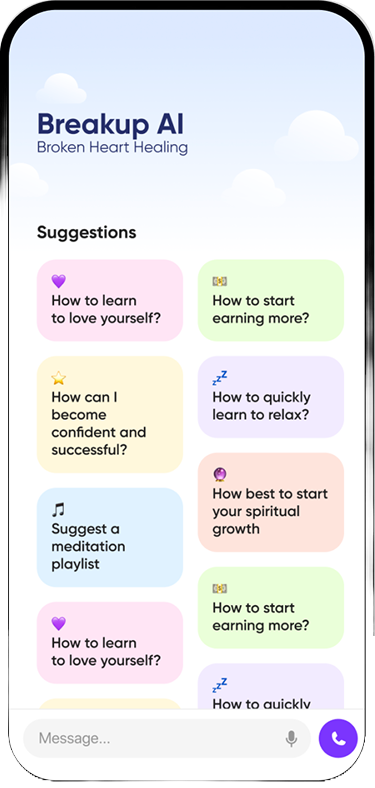
Want to text them right now? Open the SOS button in Breakup AI before you type anything. It walks you through the next few minutes and counts your no-contact days.


When full no contact isn’t possible
If you share children, a workplace, a home or a friend group, you may not be able to go fully silent. You can still go silent on everything except what’s necessary. That’s often called modified or low contact:
- Keep it to one channel, such as email or a co-parenting app, and keep it about logistics only.
- Use a short, neutral tone. Think “colleague you don’t know well,” not “ex you used to tell everything.”
- No late-night messages, no “how are you really,” no reminiscing.
- Decide in advance what topics are off limits and stick to them.
We cover living together, working together and shared custody in detail in our guide to no contact when you live or work together.
Does no contact get your ex back?
Honestly? Sometimes exes reach out during no contact, and sometimes couples do get back together. But if you go into no contact as a strategy to make them miss you, three things tend to happen: you check their socials constantly, you treat every day as a countdown, and if they don’t reach out, you feel rejected all over again. That’s not healing. That’s waiting with extra steps.
The irony is that the version of you who comes out of a real no-contact period is calmer, clearer and much better placed to decide whether getting back together is even a good idea. Often, by day 60, people find they don’t want what they were desperate for on day 3.
If you break no contact
You might slip. A lot of people do. One text doesn’t erase the work you’ve done, and it doesn’t mean you have no willpower. What matters is what happens next: don’t send a second message to explain the first, don’t refresh the chat waiting for a reply, and restart your count today. Look at what triggered it (time of day, alcohol, a song, a photo) and add that to your plan. Our guide to what to do after you break no contact walks through the next 24 hours.
What the first month usually feels like
Everyone’s different, but there’s a rough pattern. The first three to five days are often the hardest: sleep is off, the urge to check is constant, and you might feel physically restless. Week two brings small windows of normal, then sudden drops when something reminds you of them. Around weeks three and four, many people notice they went a whole morning without thinking about their ex, then feel strange about it. That strangeness is progress. For what to expect each day, see no contact day by day.
If at any point the sadness turns into thoughts of hurting yourself, please don’t white-knuckle it alone. In the US, you can call or text 988 any time. In the UK, Samaritans are on 116 123.
FAQ
What is the no contact rule?
It’s a period, usually 30 to 90 days, where you stop all communication with your ex, including texts, calls, social media interactions and messages through friends. The goal is to stop the cycle of hope and disappointment so you can recover and think clearly.
Does liking or viewing their Instagram story break no contact?
Liking, reacting or replying is contact, because they see it. Viewing a story is a grey zone: it notifies them and it keeps you emotionally hooked. If you can’t resist checking, mute or unfollow them for the duration.
Should I tell my ex I’m going no contact?
You don’t have to. If you share logistics or want to avoid them worrying, one short message is fine: say you need space and won’t be in touch for a while. Don’t turn it into a long explanation or a negotiation.
What if my ex texts me during no contact?
You can ignore non-urgent messages. If you need to respond, keep it short and neutral, and avoid questions that invite a conversation. A reply doesn’t mean you have to restart talking.
Is 30 days of no contact enough?
Thirty days is a good minimum, especially after a short relationship. After a long relationship, or if you’re still checking their profile every day, 60 to 90 days usually works better. You’re ready when contacting them feels like a calm choice, not a craving.
Is no contact manipulative?
Not when it’s done for your own recovery. It becomes manipulative when it’s used as a tactic to make someone anxious so they come back. Focus on what the silence gives you, not on what it might make them feel.