Short answer: No contact should last at least 30 days, and 60 to 90 days is better after a long or intense relationship, a breakup you didn’t see coming, or an on-again, off-again cycle. Rather than watching the calendar, end it only when you pass a simple test: you could contact your ex calmly, you’d be fine with any reply or none, and you’re not secretly hoping it restarts the relationship. Some people, especially after toxic or abusive relationships, keep no contact permanently.
If you’re asking this question, there’s a good chance you’re either on day 4 and wondering how you’ll ever reach day 30, or on day 27 and already drafting the message for day 31. Both are completely normal. This guide gives you real numbers, the reasons behind them, and a way to know when you’re actually done instead of just counting down.
Why 30 days is the starting point
Thirty days became the standard because it’s long enough to get through the most intense withdrawal and short enough to feel doable. In the first weeks after a breakup, the brain’s reward and craving systems are highly active. Helen Fisher and colleagues found this pattern in brain scans of people who’d recently been rejected (Fisher et al. 2010, Journal of Neurophysiology). Every contact feeds those systems. A month without feeding them gives the cravings time to weaken.
Thirty days also tends to cover the “second wave,” the period around weeks three and four when the shock has gone and loneliness can feel sharper. Getting through that without contact is a big psychological milestone. You’ve proven to yourself that you can feel the worst of it and still be okay.
But 30 days is a minimum. It isn’t magic, and it isn’t a guarantee that you’ll feel neutral on day 31.
How long no contact should last, by situation
| Your situation | Suggested minimum | Why |
|---|---|---|
| Short relationship or situationship (under 6 months) | 30 days | Fewer shared routines and memories to untangle |
| Relationship of 6 months to 2 years | 45-60 days | More habits and identity to rebuild |
| Long relationship (2+ years) or lived together | 60-90 days, often longer | Deep routines, shared friends, a whole “we” to unwind |
| You were broken up with unexpectedly | 60+ days | Shock and rumination need more time to settle |
| On-again, off-again relationship | 90 days | You need a clean stretch long enough to break the cycle |
| They cheated or betrayed your trust | 60-90 days | Time to process anger and rebuild your own judgment |
| Toxic, controlling or abusive relationship | Indefinite | Contact is a safety and wellbeing risk, not just a feelings risk |
| You share kids, work or a home | Ongoing logistics-only contact | Full silence isn’t possible, but emotional contact can stop |
If you share children, you can’t go silent, but you can go quiet on everything except the kids. See our guide to no contact when you have kids together for scripts and boundaries.
The readiness test: are you actually done?
The calendar tells you how long it’s been. These questions tell you whether it’s been long enough. Answer honestly.
- Do I still check their social media? If yes, you’re still in contact in every way that matters to your brain.
- Do I think about them most days? Occasional thoughts are normal. Daily preoccupation means the wound is still open.
- What do I want from contacting them? If the honest answer is “for them to miss me,” “to get back together,” or “to find out if they’re seeing someone,” you’re not done.
- Could I handle silence? Imagine you send a message and they never reply. Would you be okay by the next day?
- Could I handle hearing they’ve moved on? Imagine they mention a new partner. Would it knock you back for weeks?
- Is there a real reason to reconnect? Logistics, a shared friend group, a genuine desire to be friends once you’re both neutral. Or is it a craving dressed up as a reason?
If you hesitate on more than one of these, add another 30 days and test again. There’s no penalty for extending. There’s often a big cost to ending too soon.
Try this tonight: write your “day after” plan. Open your notes and write what you’re planning to do when no contact “ends.” Be specific. Are you going to text them? What will you say? What reply are you hoping for? Now read it back as if a close friend had written it. Would you tell that friend they’re ready? If your plan is really “message them and hope,” then the plan you need is a longer no-contact period, not a better opening line.
What if your goal is to get them back?
A lot of advice online treats no contact as a countdown: wait 21, 30 or 45 days and then reach out with the perfect text. Let’s be honest about this.
Sometimes exes do reach out during or after no contact, and sometimes couples do reconcile. But using no contact as a tactic has a built-in problem: you spend the whole period waiting. You check their stories to see if it’s “working.” You read meaning into every like. If they don’t reach out by your target day, you experience the rejection all over again. That’s not recovery. It’s a longer version of the same pain.
The version of no contact that works for you, whatever happens with them, is the one where you genuinely use the time to heal. If, after 60 or 90 days, you’re calm, clear and still believe the relationship could work, you’ll be in a far better position to have an honest conversation about what would need to change. Our honest look at whether no contact works goes into this in more depth.
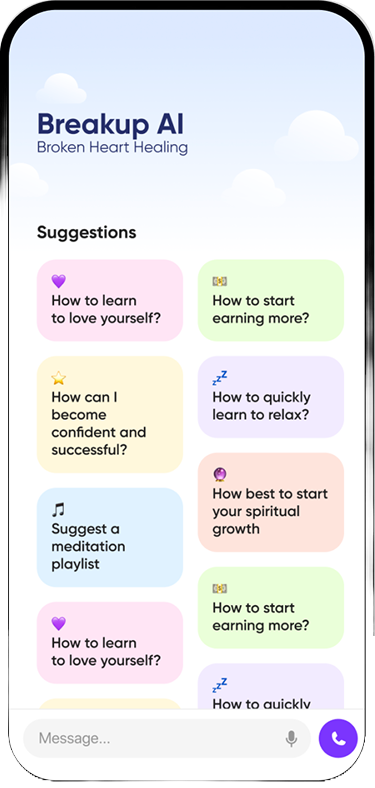
Counting the days and struggling to hold on? Breakup AI tracks your no-contact days and milestones on your home screen. When you want to text them, open the SOS button before you type anything. It walks you through the next few minutes.


What happens to the clock if…
…you broke no contact?
Restart the count from your last contact. That’s not a punishment. It’s because the cravings get a fresh boost every time you reconnect, so the time it takes for them to settle starts again too. Don’t send a follow-up message to explain the slip.
…they reach out to you?
Their message doesn’t end your no contact unless you decide it does. You can ignore non-urgent messages or reply briefly without opening a conversation, something like “Thanks, I’m taking space right now. Take care.” If you end up in a long chat, restart your count. More on handling this in what to do when your ex reaches out during no contact.
…you had to contact them for logistics?
A short, necessary, neutral exchange about bills, belongings or kids doesn’t reset your clock. Chatting, reminiscing or asking how they’re doing does.
…you checked their Instagram?
It doesn’t technically reset the clock, because they didn’t hear from you. But it does stir everything up. Research by Tara Marshall (2012, Cyberpsychology, Behavior, and Social Networking) found that monitoring an ex on Facebook was linked to more distress and longing and less personal growth. If you’re checking daily, mute or block them for the rest of your no-contact period.
When no contact should be permanent
For some relationships, there’s no “end” to no contact, and that’s healthy. Consider keeping it permanent if:
- they were controlling, threatening, or physically or emotionally abusive;
- contact consistently leaves you anxious, ashamed or doubting yourself;
- you’ve tried to be friends several times and it always slides back into the old pattern;
- they’ve repeatedly crossed boundaries you’ve stated clearly.
If you feel unsafe, contact a domestic violence service. In the US, the National Domestic Violence Hotline is 1-800-799-7233. In the UK, the National Domestic Abuse Helpline is 0808 2000 247.
Why longer is usually kinder to yourself
After a long relationship, there’s a lot to rebuild. Erica Slotter, Wendi Gardner and Eli Finkel (2010, Personality and Social Psychology Bulletin) found that breakups often leave people with a less clear sense of who they are, and that this confusion is tied to distress. Rebuilding that clarity takes time: new routines, old friends, interests that are yours again. Ending no contact early tends to pull you back into the “we” before the “I” has had a chance to recover. If you were together for years, our guide to a breakup after a long relationship covers this in detail.
It can feel like a longer no-contact period means more suffering. In practice, it’s usually the opposite. The early days are the hardest whatever you do. Extending the period mostly extends the calmer weeks, the part where it’s getting easier, and gives that progress time to stick.
FAQ
Is 30 days of no contact enough?
For a short relationship it can be. After a longer or more intense relationship, 60 to 90 days usually works better. Use the readiness test: if you still check their profile or hope they’ll come back, you need more time.
Is 2 weeks of no contact enough?
Usually not. Two weeks often lands you right in the middle of the strongest cravings, before they’ve had a chance to settle. Most people need at least a month for no contact to make a real difference.
How long should no contact last if I want my ex back?
At least 60 days, and focus on your own recovery rather than on their reaction. If you reach out while you’re still desperate for reassurance, you’re likely to repeat the same dynamic that ended things.
Does no contact reset if I text my ex?
Yes. Restart your count from the last time you initiated or kept up a conversation. A single, short logistics exchange doesn’t need to reset it.
When should I break no contact?
When you’ve passed the minimum for your situation and you can say honestly that you’d be fine with any reply, or none. If you need to make contact for kids, money or safety, do that at any time, briefly and neutrally.
Can no contact last forever?
Yes. For toxic, abusive or repeatedly painful relationships, permanent no contact is often the healthiest option. You don’t owe anyone a friendship after a breakup.