Short answer: Breakups hurt physically because your brain processes social rejection using some of the same systems it uses for physical pain, and because losing a partner triggers a full stress response (cortisol, adrenaline, disrupted sleep and appetite). Brain-imaging studies show that thinking about an ex who rejected you activates pain-related regions, while craving them activates reward circuits linked to addiction. The chest ache, nausea and exhaustion are real, and they ease as your nervous system adjusts.
People say “heartbreak” like it is a metaphor. Then it happens to you and there is an actual weight on your chest, your stomach is in knots, you cannot eat, and you feel like you have the flu without a fever. You are not being dramatic. Your body is reacting to a loss it treats as a threat.
Here is what the research actually shows, what each symptom is likely about, and what helps your body come down from it.
What the science says about breakup pain
Rejection shares wiring with physical pain
In 2003, Naomi Eisenberger, Matthew Lieberman and Kipling Williams published a study in Science using a simple ball-tossing video game called Cyberball. When participants were left out of the game, a brain region involved in the distress of physical pain (the dorsal anterior cingulate cortex) became more active. Being excluded registered, at least partly, like being hurt.
Kross et al. (2011, PNAS) went further with people who had recently gone through an unwanted breakup. While in a scanner, they looked at a photo of their ex and thought about being rejected, and in a separate task they felt a hot probe on their arm. Both experiences activated regions linked to the sensory side of physical pain, the secondary somatosensory cortex and the dorsal posterior insula. That was a big deal, because earlier studies had mainly linked rejection to the emotional side of pain. This study suggested the overlap goes further than many people assumed.
It is worth being precise: these studies show overlapping brain activity, not that a breakup is identical to a broken arm. But the overlap helps explain why the pain feels located in your body and not only in your thoughts.
Your brain is in withdrawal
Helen Fisher and colleagues (Fisher et al. 2010, Journal of Neurophysiology) scanned people who had been dumped but were still in love. Looking at the ex activated the ventral tegmental area and nucleus accumbens, parts of the reward system involved in motivation and craving, the same circuitry implicated in addiction. That is the physical root of the urge to check their profile, reread texts, or drive past their place. Your brain is chasing a reward it has learned to expect.
This is why the psychology of no contact makes sense: every contact, even a glance at their story, is a small hit that keeps the craving alive.
Your stress system is switched on
Losing an attachment figure sets off the body’s stress response. Your sympathetic nervous system (fight or flight) ramps up, stress hormones such as cortisol and adrenaline rise, and your body prioritizes alertness over digestion, sleep and repair. Short-term, that is survival wiring. Over days and weeks, it leaves you wired, tired, nauseous and achy.
Relationship researcher David Sbarra has written extensively on how separation and divorce affect health, and his work treats the end of a relationship as a real physiological stressor, not only an emotional one. Most people recover well, but the body takes time to recalibrate.
Breakup symptoms in your body, explained
| What you feel | What is likely going on | What helps |
|---|---|---|
| Chest tightness or heavy ache | Stress response tightening muscles and breathing; pain-processing overlap | Slow exhale breathing, warmth on the chest, gentle stretching |
| Nausea, no appetite, “knot” in stomach | Stress hormones diverting energy away from digestion | Small bland meals, ginger or peppermint tea, eating by the clock |
| Can’t sleep or wake at 4 a.m. | Raised arousal and cortisol, rumination at night | Fixed wake time, phone out of bedroom, wind-down routine |
| Exhaustion, heavy limbs | Poor sleep, under-eating, constant alertness burning energy | Short walks in daylight, regular meals, rest without guilt |
| Racing heart, shaky, panicky | Adrenaline surges, often triggered by reminders | Grounding, cold water on the face, longer exhales |
| Headaches, jaw pain | Muscle tension, crying, dehydration, clenching | Water, relaxing the jaw, neck and shoulder stretches |
| Getting sick more easily | Sustained stress and poor sleep can affect immune function | Sleep, food, and treating this period like recovery |
Can a breakup actually break your heart?
There is a real condition called takotsubo cardiomyopathy, often nicknamed “broken heart syndrome.” It is a temporary weakening of the heart muscle that can be triggered by intense emotional or physical stress, and its symptoms look like a heart attack: chest pain and shortness of breath. It is rare, it most often affects older women, and most people recover. It is not the same as the ache most heartbroken people feel.
The practical rule is simple. If you have sudden, crushing chest pain, pain spreading to your arm, jaw or back, shortness of breath, fainting, or a heartbeat that feels badly wrong, treat it as a medical emergency and call emergency services. Do not assume it is “just the breakup.” Doctors would much rather check and find nothing.
Why the pain comes in waves
You might feel almost okay at lunch and then get flattened at 9 p.m. That is typical. Physical breakup pain tends to spike around:
- Reminders that reactivate the reward and pain systems (a photo, their name, a place).
- Uncertainty: “maybe they’ll text,” “are they seeing someone?” Uncertainty keeps your stress system on alert.
- Tiredness and hunger, which lower your capacity to regulate.
- Contact: a reply, a like, a sighting. Even good news from them can set you back physically for a day or two.
Each spike is usually shorter than it feels. The surge rises, peaks and falls if you do not add fuel to it by scrolling, replaying or texting. Our guide to the 90-second rule covers how to ride those waves.
How to ease the physical pain of a breakup
Calm the nervous system first
When your chest is tight and your heart is racing, thinking your way out rarely works. Start with the body:
- Breathe with a longer exhale. In for 4, out for 6 to 8, for two minutes. Long exhales tend to engage the calming side of the nervous system.
- Cold water. Splash your face or hold something cold for 30 seconds. Many people find it interrupts a panic spike.
- Move. A brisk 10-minute walk burns off some adrenaline. You do not need a gym session.
- Warmth and pressure. A hot shower, a heavy blanket, a hot water bottle on your chest. Comfort is not childish; it signals safety.
Feed and rest the body on a schedule
When appetite disappears, eat by the clock instead of by hunger: something small every three to four hours. Keep easy foods around (yogurt, bananas, soup, toast, protein shakes). For sleep, keep the same wake-up time daily, even after a bad night, and get daylight early. The guide to sleeping after a breakup has a full routine.
Cut the hits that keep the craving going
Since part of the pain is a craving cycle, reducing exposure helps the body settle. Mute or unfollow, archive the chat, stop checking their activity status. Every time you check, you get a jolt and your body starts over.
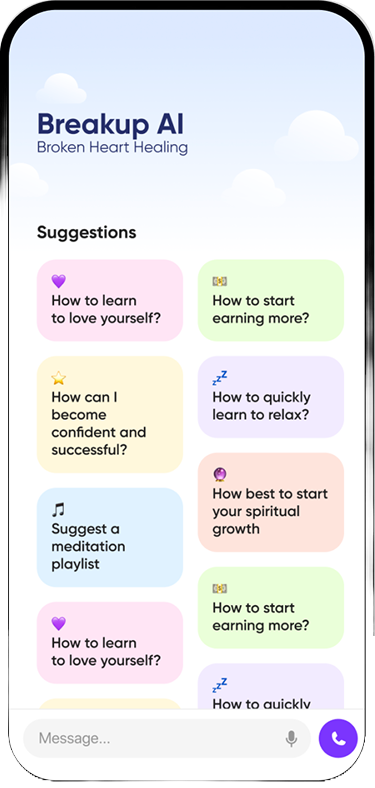
Chest tight and about to text them? Open the SOS button in Breakup AI before you type anything. It walks you through the next few minutes and counts your no-contact days.


Let people in
Social contact is one of the strongest buffers against stress we know of. A hug, a phone call, sitting on a friend’s sofa watching rubbish TV: these are not distractions from healing, they are part of it. If you have been isolating, one small step is enough: “Can I come over on Saturday? I don’t want to talk about it, I just don’t want to be alone.”
A note on painkillers
A widely cited study (DeWall et al. 2010, Psychological Science) found that people taking acetaminophen daily for three weeks reported less day-to-day hurt feelings than people taking a placebo. It is an interesting finding about how pain systems overlap. It is not a recommendation to medicate heartbreak, and you should not take painkillers regularly without talking to a doctor or pharmacist.
Try this tonight: a 10-minute body reset before bed.
- Put your phone on charge outside the bedroom or across the room.
- Take a warm shower or hold a hot water bottle against your chest for five minutes.
- Lie on your back and breathe in for 4, out for 7, ten times.
- Scan from your jaw down: unclench your teeth, drop your shoulders, soften your belly.
- Say, quietly or in your head: “This is my body grieving. It will settle.”
How long does the physical pain last?
The sharpest physical symptoms (nausea, no appetite, chest tightness, insomnia) are usually worst in the first few days to few weeks. As contact decreases and routines rebuild, most people notice their body settling over several weeks, with spikes around reminders. Lingering fatigue and low mood can take longer. If physical symptoms are not improving after a month or two, or you have lost a lot of weight, see a doctor. They can rule out other causes and help with sleep or mood if needed. For a broader sense of timing, see how long it takes to get over a breakup.
If the pain is turning into hopelessness or thoughts of not wanting to be alive, please reach out now. In the US, call or text 988. In the UK, call Samaritans on 116 123.
FAQ
Why does my chest hurt after a breakup?
Chest pain after a breakup is usually caused by the stress response (tight muscles, shallow breathing, adrenaline) plus brain systems that overlap with physical pain. If chest pain is sudden, crushing, spreads to your arm or jaw, or comes with breathlessness, seek emergency care.
Is broken heart syndrome real?
Yes. Takotsubo cardiomyopathy is a real, usually temporary heart condition that can be triggered by severe stress. It is rare and most common in older women. Its symptoms resemble a heart attack, so any severe chest pain needs urgent medical attention.
Why can’t I eat after a breakup?
Stress hormones shift your body away from digestion, which can cause nausea and loss of appetite. Eat small, simple meals by the clock rather than waiting for hunger, and see a doctor if you are losing weight quickly.
Is breakup pain like withdrawal?
In some ways. Fisher et al. (2010) found that people still in love with an ex who rejected them showed activity in reward regions also linked to craving and addiction. That is why contact and checking their social media can make the pain flare.
How long does the physical pain of a breakup last?
The strongest symptoms usually ease within a few weeks as your stress response settles, with spikes when reminders hit. Persistent symptoms beyond a month or two are worth discussing with a doctor.
Can a breakup make you physically sick?
The stress of a breakup can disrupt sleep, appetite and immune function, so you may feel run down or catch colds more easily. Rest, regular meals and social support help your body recover.