
Short answer: Not being able to sleep after a breakup is very common: stress keeps your body on high alert, and the quiet dark is when your mind replays everything. Keep the same wake-up time every day, build a calm 30 to 60 minute wind-down without your phone, write your worries down before bed, and if you’re awake for about 20 minutes, get up and do something dull in low light until you’re sleepy. Cut late caffeine and alcohol, and see a doctor if it lasts for weeks.
It’s 2:47am. You’ve been lying here since midnight. Your body is exhausted but your brain is running a full documentary: the first date, the last fight, the thing they said in March. Every time you nearly drift off, your stomach drops and you’re wide awake again. Then the thought arrives: “If I just check their Instagram, maybe I’ll be able to sleep.”
You won’t. But you can sleep better than this. Here’s how.
Why you can’t sleep after a breakup
Your body thinks it’s in danger
Losing a partner triggers your stress response. Stress hormones keep your heart rate up and your mind alert, which is great for running from a threat and terrible for falling asleep. That’s why you can feel wired and exhausted at the same time. If anxiety is a big part of it, our guide to anxiety and panic after a breakup covers the daytime side too.
The dark is where rumination lives
During the day, work, people and noise keep your mind busy. In bed there’s nothing between you and your thoughts. The replay starts, and replaying the breakup is a guaranteed way to stay awake. Our guide for when you can’t stop thinking about your ex has tools for the loop itself.
The bed itself is a reminder
If you shared a bed, the empty side, the smell of the pillow, even the routine of saying goodnight can hit hardest exactly when you’re trying to switch off.
Coping habits backfire at night
A few drinks to take the edge off, scrolling until your eyes close, lying in bed for hours hoping sleep will come: all very human, and all known to make sleep worse.
Why sleep matters so much right now
Poor sleep doesn’t just make you tired. It makes everything feel heavier. In a well-known study by Seung-Schik Yoo, Matthew Walker and colleagues (2007, Current Biology), people who’d been kept awake for a night showed a much stronger amygdala response to upsetting images than people who’d slept. In plain terms, a sleep-deprived brain reacts more intensely to emotional pain.
That creates a vicious circle: the breakup ruins your sleep, and bad sleep makes the breakup feel worse. Fixing sleep, even partially, is one of the fastest ways to feel more like yourself.
Which sleep problem do you have?
| The problem | Most useful fix |
|---|---|
| Can’t fall asleep, mind racing | Worry list before bed, wind-down routine, 20-minute rule |
| Waking at 3 or 4am and can’t get back | Stay off your phone, get up if wide awake, keep a fixed wake-up time |
| Urge to text them in bed | Phone charging outside the bedroom, plan for the urge |
| Dreams about your ex | Normal; write them down if they linger, don’t treat them as signs |
| The empty bed feels unbearable | Change the bedroom: new sheets, different side, sound in the room |
| Sleeping too much, can’t get up | Fixed alarm, daylight early, plan one thing for the morning |
Your breakup wind-down routine
Your brain needs a signal that the day is over. A consistent routine provides that signal. Start 30 to 60 minutes before you want to be asleep.
- Write the worry list. Spend five minutes writing down everything on your mind, including the breakup thoughts, plus one small next step for anything practical. In a study by Michael Scullin and colleagues (2018, Journal of Experimental Psychology: General), people who wrote a to-do list for the coming days before bed fell asleep faster than people who wrote about tasks they’d already completed. Getting it on paper tells your brain it doesn’t have to hold on to it.
- Put your phone to bed first. Charge it in another room, or at least across the room. Use a cheap alarm clock if you need one. This one step removes the late-night scrolling, the profile checking and most of the 2am texts.
- Dim the lights. Switch to lamps and lower the brightness. Bright light in the evening tells your body it’s still daytime.
- Do one calming, non-screen thing. A warm shower, stretching, a paper book, a familiar audiobook or podcast at low volume.
- Breathe out slowly. Lying in bed, breathe in through your nose for a count of four and out through your mouth for a count of six or eight. Long exhales help your body shift out of alert mode.
- Keep the same wake-up time. This matters more than bedtime. Getting up at the same time every day, even after a terrible night, is what resets your body clock.
Try this tonight: An hour before bed, take a piece of paper and write two lists: “What’s on my mind” and “One small step for tomorrow.” Then plug your phone in outside your bedroom. In bed, do ten slow breaths with a longer exhale than inhale. If you’re still awake after about 20 minutes, get up and read something dull in low light until your eyes feel heavy.
If you can’t fall asleep: the 20-minute rule
It seems logical to stay in bed and keep trying. Unfortunately, lying awake for hours teaches your brain that bed is a place for worrying, not sleeping. Sleep specialists use a technique called stimulus control, first developed by Richard Bootzin in the 1970s and now part of cognitive behavioural therapy for insomnia (CBT-I).
The basic idea: if you’ve been awake for roughly 20 minutes (don’t check the clock, just estimate), get up. Go to another room, keep the lights low, and do something boring: fold laundry, read a dull book, listen to calm music. Go back to bed only when you feel sleepy. Repeat as needed. It’s frustrating at first, and it works because it rebuilds the link between your bed and sleep.
Waking up at 3am
Many heartbroken people fall asleep from sheer exhaustion, then wake in the early hours with a jolt of dread. If this happens:
- Don’t pick up your phone. The light wakes you more, and 3am is when people check their ex’s profile and send messages they regret. If you want to text them right now, our guide to the urge to text your ex at night is written for exactly this moment.
- Don’t do the maths. “If I fall asleep now, I’ll get three hours” adds pressure. Turn the clock away.
- Try a mental task. Some people find it helps to give their mind something neutral to do: picture a walk through your childhood home, or think of a word for each letter of the alphabet in a category like fruits or cities.
- Get up if you’re wide awake. Same 20-minute rule. Low light, something boring, back to bed when sleepy.
Dreams about your ex
Dreaming about your ex is extremely common after a breakup. Your brain processes emotional experiences during sleep, so the person who’s taking up most of your emotional bandwidth during the day often shows up at night. A dream where you’re back together doesn’t mean you should be, and a dream where they’re with someone else isn’t a prediction. If a dream leaves you shaken, write a few lines about it in the morning, then move on with your day.
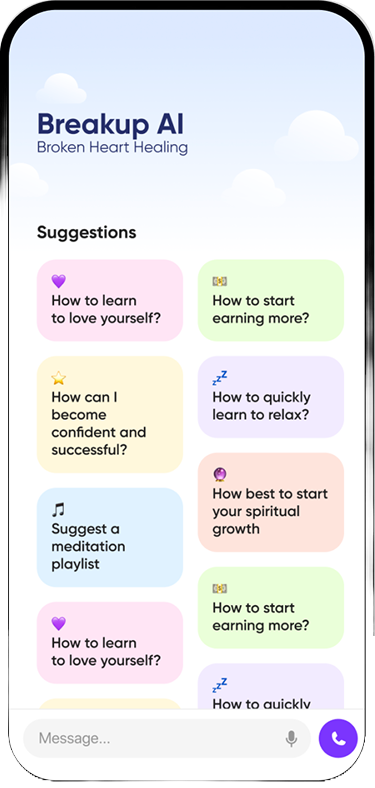
Lying awake and want to text them? Open the SOS button in Breakup AI before you type anything. It walks you through the next few minutes and counts your no-contact days.


Making the empty bed bearable
If you shared your bed, it’s worth changing the space so it stops feeling like a shrine to the relationship:
- Wash or replace the bedding, especially anything that smells like them.
- Sleep in the middle or on their side. It sounds small; it changes the feeling of the bed.
- Move the furniture, change a lamp or put up something new on the wall.
- Add sound to the room: a fan, white noise, rain sounds or a familiar podcast on a sleep timer.
- Use a body pillow or a heavier blanket if you miss the feeling of someone next to you.
- Box up photos and gifts from the bedroom for now. You don’t have to throw them away.
Things that quietly make it worse
- Alcohol. It can help you fall asleep, but it disrupts sleep later in the night, which is a big reason for 3am wake-ups.
- Caffeine after lunch. Caffeine lingers in your system for hours. Try to stop by early afternoon.
- Long naps. If you need one, keep it under 30 minutes and before mid-afternoon.
- Lying in. Sleeping until noon after a bad night pushes your body clock later and makes the next night harder.
- Doom-scrolling. Especially their socials, or sad playlists on repeat.
What if I’m sleeping too much?
Some people go the other way and want to sleep all the time. Sleep becomes an escape from feeling. That’s understandable for a few days, but if you’re sleeping 11 or 12 hours and still exhausted, it can be a sign of low mood. Set a fixed alarm, get daylight as soon as you’re up, and plan one small thing for each morning so there’s a reason to get out of bed. If you’re also crying a lot or feel flat most of the day, read our guide to crying every day after a breakup.
When to see a doctor
A few bad weeks of sleep after a breakup is normal. Talk to a doctor or GP if:
- You’ve been sleeping badly for more than a few weeks and it isn’t improving.
- You’re struggling to function at work, school or behind the wheel.
- You’re relying on alcohol, over-the-counter sleep aids or someone else’s medication to sleep.
- Sleep problems come with feeling low or hopeless most of the day.
Insomnia that happens at least three nights a week for three months or more is considered chronic, and the recommended first treatment is CBT-I, a structured talking therapy that’s very effective. Ask your doctor before starting any sleep medication or supplement. And if you’re having thoughts of hurting yourself, please don’t wait until morning: in the US, call or text 988.
FAQ
Why can’t I sleep after a breakup?
A breakup triggers your stress response, which keeps your body alert, and the quiet of night gives your mind space to replay the relationship. Changes to your routine, an empty bed, phone checking, caffeine and alcohol can all add to the problem.
How long does insomnia last after a breakup?
For many people, sleep starts improving within a few weeks as the initial shock fades, especially with a consistent wake-up time and a wind-down routine. If you’re still sleeping badly after several weeks, or it’s affecting your daily life, talk to a doctor.
Is it normal to dream about your ex after a breakup?
Yes, very. Your brain processes emotions during sleep, so the person on your mind during the day often appears in your dreams. These dreams aren’t signs or predictions; they usually become less frequent as you heal.
Should I take sleeping pills after a breakup?
Talk to a doctor before taking any sleep medication or supplement. Many people improve with routine changes and techniques from CBT-I, which is the recommended first-line treatment for persistent insomnia.
What should I do when I wake up at 3am thinking about my ex?
Don’t pick up your phone or check the time. Breathe slowly with longer exhales, and try a neutral mental task. If you’re still wide awake after around 20 minutes, get up, keep the lights low and do something boring until you feel sleepy.
Why do I sleep so much after a breakup?
Sleeping more can be a way of escaping painful feelings, and it can also be a sign of low mood. Set a fixed alarm, get daylight early and plan something for each morning. If oversleeping comes with feeling flat or hopeless most days, talk to a doctor.