
Short answer: When you want to text your ex, do something that changes your state fast: breathe slowly for a minute, splash cold water on your face, write the message in your notes, call a friend, or leave the room. Then fill the gap with something absorbing. Below are 30 ideas, sorted by how much time you’ve got and what you’re feeling, so you can pick one in seconds.
“Just don’t text them” is useless advice when your thumb is already hovering over their name. You need something to do instead, right now, that’s easier than sending the message.
The urge to text an ex usually comes in waves: it builds, peaks, and fades. Your job isn’t to never feel it. It’s to have something ready that carries you through the peak. Pick from the list below based on how long you can manage and what’s driving the urge.
Match the urge to the fix
Most urges to text come from one of a few feelings. Matching the fix to the feeling works better than random distraction.
| What you’re feeling | What you actually need | Try first |
|---|---|---|
| Lonely | Connection with someone | #6, #11, #12 |
| Anxious or panicky | To calm your body | #1, #2, #3 |
| Angry | To release energy safely | #9, #14, #16 |
| Sad or nostalgic | To feel it without feeding it | #7, #15, #17 |
| Bored | Something absorbing | #18, #20, #21 |
| Wanting closure | To say it somewhere safe | #7, #15, #25 |
| Tipsy | Distance from the phone | #5, #10, #11 |
If you’ve got 1 minute
These are for the moment the urge spikes. They work on your body first, which then helps your thinking catch up.
- Breathe out longer than you breathe in. In for four counts, out for six or eight, for one minute. Slow, long exhales help shift your nervous system toward calm.
- Cold water on your face. Splash it, or hold a cold, wet cloth over your eyes and cheeks for 30 seconds. Dialectical behaviour therapy (DBT) uses cold temperature as a quick skill for intense emotion.
- Name it out loud. “I want to text her because I’m lonely and it’s late.” Putting feelings into words can lower their intensity, an effect Matthew Lieberman’s lab showed in a 2007 Psychological Science study.
- Read your reason. Keep one sentence pinned in your notes about why you stopped contact. Read it, slowly, twice.
- Put the phone in another room. Physically. Even 30 seconds of walking breaks the impulse loop.
If you want a structured version of this, try the 90-second rule for cravings.
If you’ve got 10 minutes
- Text someone else. Pick a friend who knows the story. “I’m about to text my ex. Distract me?” is a complete message.
- Write the text you want to send, in your notes. Every word. Date it. Don’t send it. You’ve said it; you just haven’t handed it over.
- Do a quick “if I send this” forecast. Write three likely outcomes: no reply, a cold reply, a warm reply that changes nothing. How would you feel at each one tomorrow?
- Move hard for five minutes. Fast walk, stairs, push-ups, dancing in the kitchen. Anger and adrenaline need somewhere to go.
- Take a hot shower. Phone outside the bathroom. It’s a reset, and you can’t text with wet hands.
- Call someone instead of texting. A voice beats a screen for loneliness. A parent, a sibling, the friend who always picks up.
- Send a voice note to a friend saying everything you wanted to say to your ex. Ask them not to reply with advice, just “heard you.”
- Make something warm to drink. Tea, hot chocolate, warm milk. The ritual itself slows you down.
- Clean one small thing. A drawer, the sink, your desk. Doing something with your hands gives restless energy a target.
- List what you won’t miss. Five real things. The way they went quiet when they were annoyed. The cancelled plans. Your brain is running a highlight reel; this adds the deleted scenes.
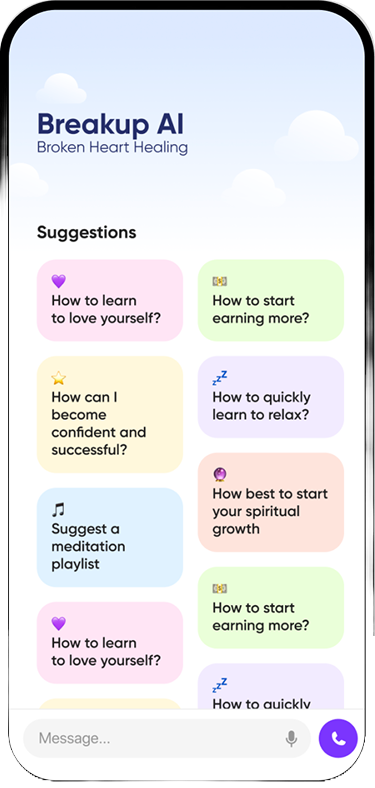
Already halfway through typing a text to your ex? Open the SOS button in Breakup AI before you hit send. It walks you through the next few minutes, lets you say it to the AI coach instead, and counts your no-contact days.


If you’ve got an hour
- Go for a proper walk, no destination, ideally outside. Bring headphones and a podcast you like.
- Let yourself cry, on purpose. Sad playlist, a film that always gets you. Twenty minutes of feeling it is better than three hours of avoiding it by texting.
- Cook something that takes attention. Something with steps. Your brain can’t easily spiral while you’re timing three things on the stove.
- Get out of the house. A café, a library, a friend’s sofa, the gym. Change your environment and the cues that point to them.
- Start a long game or puzzle. A jigsaw, a video game with a story, a crossword. Absorbing and low-stakes.
- Rewatch a comfort show. Something familiar with no romantic storylines that sting. You already know how it ends, which is the point.
- Sort the reminders. Put their hoodie, gifts, and notes in a box and put the box out of sight. You don’t have to throw anything away. Just stop seeing it daily.
- Clean up your feeds. Mute their profile, their close friends, and any account that keeps surfacing them. Our guide on how to stop checking your ex’s Instagram helps.
- Do one thing you put off while you were together. The haircut, the hobby, the friend you drifted from, the room you wanted to repaint.
- Write a full unsent letter. Not a text, a letter. Everything: what you loved, what hurt, what you wish they’d known. See our guide to the unsent letter method. Expressive writing research going back to James Pennebaker’s work in the 1980s suggests that writing about emotional experiences can help many people process them.
For the days and weeks ahead
These won’t help in the next five minutes, but they’ll mean fewer five-minute emergencies.
- Book something into your worst time slot. If Sunday evenings are your weak spot, schedule a standing call, a class, or dinner with a friend then.
- Plan your evenings by default. Not every hour, just a loose shape: walk, food, call, show, bed. Empty evenings are where urges grow.
- Set up phone friction. Mute and unpin their chat, rename the contact, and set app limits on messaging after 10pm or 11pm.
- Move your body most days. It helps sleep and mood, and both make urges easier to manage.
- Talk to someone trained. If you keep coming back to the same pain, a therapist or counsellor can help you understand it. That’s not a sign it’s serious; it’s a sign you’re taking it seriously.
For a structured first week, try our breakup self-care plan.
Why these work better than willpower
Heartbreak isn’t just sadness. Helen Fisher and colleagues found that looking at a photo of a recent ex activated brain areas involved in reward and craving, similar to those seen in addiction (Fisher et al., 2010, Journal of Neurophysiology). Texting your ex is your brain trying to get relief from that craving.
Telling yourself “don’t” leaves the craving with nowhere to go. Doing something else gives it an outlet. And planning in advance makes it more likely you’ll actually do it: Peter Gollwitzer’s research on implementation intentions (American Psychologist, 1999) found that “if X, then I’ll do Y” plans help people follow through on their goals far more than good intentions alone.
That’s why the most useful thing you can do with this list is pick your options before you need them.
Try this tonight: build your “instead” card (5 minutes)
- Pick three ideas from this list: one 1-minute, one 10-minute, one 1-hour.
- Write them as if-then plans in your phone notes: “If I want to text him, then first I’ll do #1, then I’ll text Priya, then I’ll go for a walk.”
- Pin the note to the top of your notes app, or screenshot it as your lock screen.
- Tell the friend in your plan that they’re in it.
What about “just one” text?
One text is rarely just one. A reply leads to a conversation; no reply leads to hours of checking. Either way, you’re back to thinking about them all night. If you’re still unsure whether there’s a good reason to reach out, our guide to stopping texting your ex covers how to tell a genuine practical need from an urge in disguise.
And if you do slip? Don’t send a follow-up. Put the phone away, note what triggered it, and start your count again tomorrow. One message doesn’t undo everything you’ve done.
If you’re feeling hopeless or having thoughts of harming yourself, please don’t wait. In the US, call or text 988. In the UK, call Samaritans on 116 123.
FAQ
What should I do instead of texting my ex?
In the moment, calm your body first: slow breathing, cold water on your face, or leaving the room. Then write the message in your notes, text or call a friend, or do something absorbing like a walk, cooking, or a game. Plan your options in advance so you don’t have to think when the urge hits.
How do I distract myself from texting my ex?
Choose distractions that match the feeling. If you’re lonely, talk to a real person. If you’re anxious, do something physical and calming. If you’re bored, pick something absorbing. Putting your phone in another room adds useful distance.
Is it better to write a text to my ex and not send it?
For many people, yes. Writing the message in your notes or as an unsent letter lets you express what you feel without reopening contact. Rereading it the next day often shows you why it was better left unsent.
How long does the urge to text an ex last?
A single urge often peaks and fades within minutes if you don’t act on it. Over weeks of no contact, most people find urges become less frequent and less intense, though they can return around special dates or stressful days.
What do I do when I miss my ex at night?
Charge your phone outside the bedroom, listen to something calming instead of scrolling, write your thoughts down, and if you’re awake for a long time, get up and do something quiet in dim light. Save any message you want to send for the morning.