
Short answer: To stop checking your ex’s Instagram, make it harder to do (mute or block them, clear them from your search history, log out or set app limits), notice the moments that trigger the urge, and have a replacement ready for those moments. The checking feels like it will bring relief, but research on post-breakup social media monitoring links it to more distress and longing, so every look tends to restart the hurt rather than end it.
You tell yourself it’s the last time. You type the first two letters of their username, the profile loads, and suddenly you’re 40 weeks deep in their tagged photos, trying to work out who the girl in the yellow dress is. Then you put the phone down feeling worse than before you picked it up.
If that’s you, you’re in very good company. Here is why it’s so hard to stop, and a practical plan that actually works.
Why you keep checking (it’s not just curiosity)
Heartbreak runs on craving
When Helen Fisher and colleagues scanned the brains of recently rejected people looking at a photo of their ex (Fisher et al. 2010, Journal of Neurophysiology), areas associated with reward and craving were active, the same broad systems involved in addiction. Their Instagram is a photo of them, on demand, 24 hours a day. Of course you want to look.
Unpredictable rewards are the most addictive kind
Sometimes you check and there’s nothing new. Sometimes there’s a story. Sometimes there’s a cryptic quote you can read as being about you. That unpredictability is exactly what keeps the habit alive. Behavioural psychologists call it intermittent reinforcement: when a reward shows up only some of the time, people keep checking far longer than if it showed up every time, or never.
You’re trying to answer questions Instagram can’t answer
Underneath the scrolling there’s usually a real question. Are they happy? Do they miss me? Have they met someone? Was I replaceable? An edited grid of photos can’t answer any of those. People post their highlights, not their 3am feelings. So you look, find nothing conclusive, and look again.
What checking actually does to your recovery
In a study of people after a breakup, Tara Marshall (2012, Cyberpsychology, Behavior, and Social Networking) found that more Facebook monitoring of an ex was associated with more distress, more negative feelings, more longing for the ex, and less personal growth. Later research by Fox and Tokunaga (2015) found that people who were more invested and more distressed after a breakup were also the most likely to monitor their ex online. It becomes a loop: you hurt, so you check, and checking keeps you hurting.
| What you’re hoping to find | What usually happens |
|---|---|
| Proof they’re miserable without you | They look fine (they’re posting their good days), and you feel worse. |
| A sign they still care | You over-read a song lyric or a sad story, and your hope resets. |
| Whether they’ve met someone | You find an ambiguous photo and spend an hour investigating. |
| Closure | No new information, just a fresh sting. |
| Relief from the urge | A few seconds of relief, then the urge comes back stronger next time. |
Can your ex see that you looked?
This question keeps a lot of people up at night, so here are the basics (Instagram updates its features, so double-check in the app):
- Stories and highlights: yes. If you watch a story or a highlight, your name appears in their viewer list.
- Profile and posts: Instagram does not tell people who visited their profile or scrolled their grid.
- Accidental likes: double-tapping by mistake sends a notification. Unliking quickly may help, but they could still have seen it.
- “See who viewed your profile” apps: these don’t have access to that data, and some are scams that want your login. Don’t use them, on your side or theirs.
If you’ve been watching their stories, assume they know. That’s not a disaster, but it’s another reason to stop: you’re sending a signal every time, even if you never type a word.
The 6-step plan to stop checking
1. Remove the shortcut
Most checking happens on autopilot, so the first job is to break the autopilot. Mute their posts and stories (they won’t be told). Clear them from your Instagram search history. Unpin any saved posts or chats. If muting isn’t enough because you go straight to their profile, block them. Our guide on whether to block, mute or unfollow your ex helps you pick the right level.
2. Add friction
Every extra step between the urge and their profile gives your brain a chance to catch up. Some options:
- Log out of Instagram after each use, so you have to type your password.
- Move the app off your home screen and into a folder on the last page.
- Set a daily limit in Screen Time (iPhone) or Digital Wellbeing (Android).
- Use Instagram only on a laptop for a few weeks; it’s clunkier, which is the point.
- If you want a hard reset, deactivate your own account temporarily.
3. Learn your trigger times
For one week, every time you check (or almost check), jot down the time, where you were and how you felt. Most people discover a pattern within days: in bed before sleep, right after waking up, after a drink, after seeing a couple, after a hard day at work. Once you know your danger windows, you can plan for them.
4. Prepare a replacement
An urge without an alternative almost always wins. Pick two or three things you’ll do instead, and make them quick and physical. Text a friend “I want to check, talk me out of it.” Open a different app you’ve put in the exact spot Instagram used to be. Make tea. Do ten squats. If the urge feels huge, our guide to the 90-second rule for cravings shows you how to sit with it until it passes.
5. Close the back doors
Blocking them and then checking from a friend’s phone, a second account or a browser where you’re logged out is still checking. So is asking mutual friends for updates. Tell your closest friends: “Please don’t tell me about them unless I ask, and if I ask, remind me not to.” Most people are relieved to be given clear instructions.
6. Treat slips as data, not failure
You’ll probably slip at least once. When you do, don’t spiral. Ask: what time was it, what triggered it, what would have helped? Then reset. The goal isn’t a perfect record. It’s longer and longer gaps until checking stops feeling necessary.
Try this tonight: Before bed, put your phone on charge across the room, not next to your pillow. Then write their Instagram handle on a piece of paper and, underneath it, three honest sentences about why the relationship ended. If you want to check later, you have to get up, and the first thing you’ll see is that paper.
Use your thoughts on purpose
When the urge to look is mostly about missing them, a little mental judo can help. In a 2018 study in the Journal of Experimental Psychology: General, Sandra Langeslag and Michelle Sanchez found that thinking about an ex’s negative qualities reduced love feelings for them, though it didn’t make people feel happier in the moment. Distraction did improve mood, but didn’t change how much they loved the ex.
That gives you two tools for two jobs. When you need to loosen the attachment, write down three real, specific things that didn’t work: “They cancelled on my birthday.” “I always felt like I was too much.” When you just need to get through a bad evening, distract yourself. Neither means you’re bitter; both mean you’re being strategic. And if the pull goes beyond Instagram into thinking about them all day, read our guide for when you can’t stop thinking about your ex.
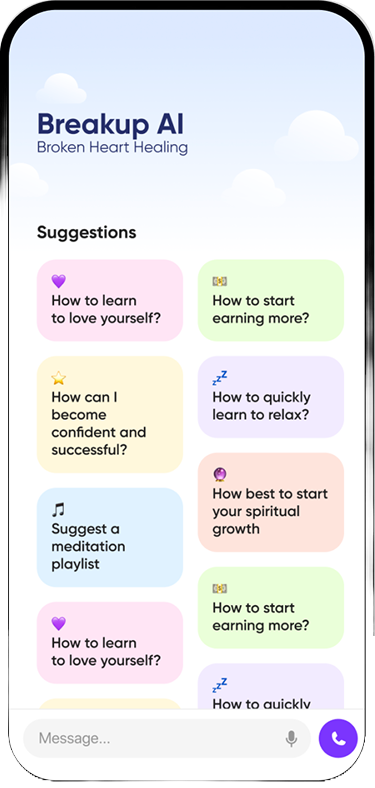
About to open their profile again? Open the SOS button in Breakup AI instead. It walks you through the next few minutes and counts your no-contact days.


If you already saw something that hurt
Maybe you checked and found exactly what you were afraid of: a new partner, a holiday you were supposed to go on together, a post that says they’ve “never been happier.” That pain is real. Here’s how to handle the next hour:
- Close the app. Don’t keep scrolling for more detail; more detail never helps.
- Remind yourself that a post is a snapshot someone chose to share, not the full story of their life.
- Say what you feel out loud or write it down: “I’m jealous and I feel replaced.” Naming the emotion usually takes some of the edge off.
- Reach out to one person, or to a support tool, rather than sitting alone with it.
- Mute or block now, while the reason is fresh.
If they moved on fast, it doesn’t mean you were easy to replace. Our articles on when your ex moved on immediately and on seeing your ex with someone new unpack what that usually means.
How long until the urge fades?
There’s no fixed timeline, but there is a pattern. The first week of not checking is usually the hardest, because your brain keeps expecting its regular dose. After a couple of weeks of real distance, most people notice the urge comes less often and with less force. It may still spike on anniversaries, birthdays, or after you hear their name, but the spikes get shorter. Each time you ride one out without looking, you’re teaching your brain that it doesn’t need that profile to feel okay.
FAQ
Can my ex see if I look at their Instagram?
They can see if you watch their stories or highlights, because your name shows in the viewer list. Instagram doesn’t tell people who visited their profile or looked at their posts. Accidental likes do send a notification.
Why can’t I stop checking my ex’s Instagram?
Heartbreak activates the brain’s reward and craving systems, and Instagram offers unpredictable “rewards” like a new story or photo. That combination is very habit forming. You’re also trying to answer emotional questions, like whether they miss you, that a feed can’t answer.
Is it normal to stalk your ex on social media?
Yes, it’s very common after a breakup. But common doesn’t mean helpful: research links monitoring an ex online with more distress, more longing and slower personal growth. It’s normal to want to look, and worth working to stop.
Should I delete Instagram after a breakup?
You don’t have to. Muting or blocking your ex, clearing your search history and setting app limits is often enough. If you keep finding ways around those, temporarily deactivating your account for a few weeks can give you a clean break.
How do I stop checking my ex’s social media at night?
Charge your phone across the room, set an app limit or downtime for late hours, and decide in advance what you’ll do instead, such as texting a friend or listening to a podcast. Night is a common trigger, so a plan made during the day works better than willpower in bed.