
Short answer: Anxiety after a breakup is extremely common because losing a partner sets off your body’s alarm system: racing heart, tight chest, nausea, waking at 4am with dread, sometimes full panic attacks. It usually eases over weeks as your nervous system adjusts. In the meantime, slow breathing with long exhales, grounding, regular meals and sleep, less caffeine and alcohol, and not texting your ex for reassurance make a real difference. If panic is frequent or you can’t function, get support.
Nobody warned you about this part. You expected to be sad. You didn’t expect your heart to pound in the middle of a meeting, or to wake up feeling like something terrible is about to happen, or to not be able to eat for three days. Some people are genuinely scared they’re having a heart attack.
If that’s you, take a breath (a long one, out through your mouth). This guide explains what’s going on in your body, what to do in a panic moment, and how to bring the baseline down day by day.
Why a breakup makes you so anxious
Your attachment system is sounding the alarm
Humans are wired to stay close to the people they’re attached to. When that bond is suddenly broken, the brain treats it as a threat. Attachment researchers going back to John Bowlby described this “separation distress”: agitation, searching, inability to settle. Anthropologist Helen Fisher calls the early stage of rejection “protest,” and her brain imaging work (Fisher et al. 2010, Journal of Neurophysiology) found heightened activity in craving and motivation systems in recently rejected people. Your body isn’t overreacting. It’s doing what it was built to do when it loses someone important.
Emotional pain and physical pain overlap
In a study by Ethan Kross and colleagues (Kross et al. 2011, PNAS), people who had recently gone through an unwanted breakup looked at photos of their ex while in a brain scanner. Regions that also respond to physical pain became active. That helps explain why heartbreak can feel so physical: the ache in your chest isn’t only a metaphor. Our article on why breakups hurt physically goes into more detail.
Uncertainty is fuel for anxiety
Your future just changed shape. Where will you live? Will you be alone? Are they already with someone? Anxiety thrives on questions without answers, and a breakup creates dozens of them overnight.
Your basics fall apart
Poor sleep, skipped meals, extra coffee to get through the day and extra wine to get through the night all make anxiety worse on their own. A breakup tends to knock out all four at once.
Common symptoms (and what’s behind them)
| What you notice | What’s going on | A quick thing that helps |
|---|---|---|
| Racing heart, chest tightness | Stress hormones speed up your heart and tense chest muscles | Long, slow exhales for two minutes |
| No appetite, nausea, “stomach in knots” | Stress response shifts energy away from digestion | Small, easy foods often: toast, yoghurt, soup, smoothies |
| Shaky, jittery, restless | Your body is primed for action with nowhere to go | A brisk ten-minute walk |
| Waking at 3 or 4am with dread | Stress disrupts sleep, especially the second half of the night | Get up, low light, something boring, back to bed when sleepy |
| Can’t concentrate | Your attention keeps snapping back to the threat (the loss) | Work in short blocks with a timer |
| Sudden waves of panic | A surge of fight-or-flight that peaks and passes | The panic steps below |
An important note: anxiety can cause chest pain, but so can heart problems. Severe emotional stress can, rarely, trigger a real heart condition known as stress cardiomyopathy or “broken heart syndrome.” If you have chest pain that’s severe, crushing, spreading to your arm, jaw or back, or comes with shortness of breath or fainting, call emergency services. Don’t decide on your own that it’s “just anxiety.”
What to do during a panic attack
A panic attack is a sudden surge of intense fear with physical symptoms like a pounding heart, shaking, breathlessness, dizziness or feeling unreal. It feels dangerous. It isn’t dangerous in itself, and it typically peaks within minutes and then subsides. These steps help you ride it out:
- Name it. Say to yourself: “This is panic. It’s uncomfortable and it will pass.” Labelling an emotion can reduce activity in the brain’s alarm centre (Lieberman et al. 2007, Psychological Science).
- Breathe out longer than you breathe in. Try a double inhale through the nose (one breath, then a small top-up sip of air), followed by a long, slow exhale through the mouth. In a Stanford study, Melis Balban and colleagues (2023, Cell Reports Medicine) found this “cyclic sighing” practised for five minutes a day improved mood more than mindfulness meditation did. Repeat for a few minutes.
- Ground yourself through your senses. Name five things you can see, four you can touch, three you can hear, two you can smell, one you can taste. It pulls your attention out of the spiral and into the room.
- Feel your feet. Press them into the floor. Notice the weight of your body on the chair. Your body is here, and you’re safe right now.
- Don’t fight the sensations. Trying to force panic away often makes it stronger. Let your heart race; it’s allowed. It will slow down on its own.
- Afterwards, do something gentle. Sip water, step outside, text a friend. Don’t judge yourself for it.
Try this tonight: Before bed, practise the breathing pattern for five minutes while you’re calm: double inhale through the nose, long exhale through the mouth. Set a timer. Practising when you’re not panicking makes it far easier to use when you are. Then write down one thing that worried you today and one small thing you’ll do about it tomorrow, and close the notebook.
The anxious urge to text your ex
Anxiety and the urge to contact your ex are tightly linked. When you’re anxious, your brain looks for the fastest way to feel safe, and for months or years that was them. So you get the urge to send “Are you okay?” or “Can I just ask you one thing?” or “Did I do something wrong?” What you’re really looking for is reassurance.
The trouble is that reassurance from an ex rarely lasts. Even if they reply kindly, the relief fades within hours, and the anxiety comes back, often stronger, because now you’re also waiting for the next reply. Many people find their anxiety drops noticeably once they stop seeking contact altogether.
When the urge hits, treat it like a wave you can ride rather than a command you have to obey. Our guide to the 90-second rule for cravings walks you through exactly how. And for a longer plan, see how to stop texting your ex.
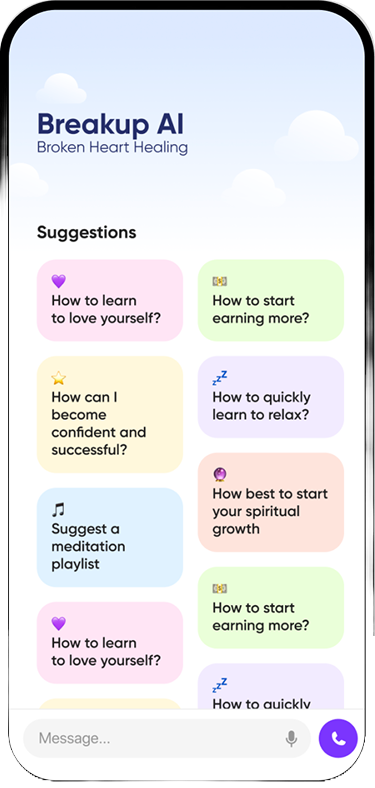
Anxiety spiking and want to text them? Open the SOS button in Breakup AI before you type anything. It walks you through the next few minutes and counts your no-contact days.


A daily plan to lower your baseline anxiety
The panic steps are for emergencies. The real progress comes from bringing your everyday anxiety level down, so you have fewer emergencies. None of this is glamorous, and all of it works better together.
Morning
- Get up at the same time every day, even after a bad night.
- Get outside or near a bright window within the first hour.
- Eat something small, even if you’re not hungry.
- Keep coffee to one or two cups, and not on an empty stomach. Caffeine can mimic and amplify anxiety symptoms.
Daytime
- Move for at least 20 minutes: walking counts. Exercise is one of the best-studied ways to reduce anxiety.
- Give worry an appointment: 15 minutes at a set time to think, write or vent about the breakup. Outside that window, jot the thought down and postpone it.
- Talk to at least one person, even briefly. Isolation turns up the volume on anxious thoughts.
- Mute or block your ex on social media. Every unexpected glimpse of them is a fresh jolt.
Evening
- Go easy on alcohol. It may calm you for an hour, but it disrupts sleep and often brings next-day anxiety.
- Stop scrolling an hour before bed and dim the lights.
- Do five minutes of slow breathing or a body scan.
- Charge your phone away from your bed.
Sleep problems and anxiety feed each other, so if nights are the worst, our guide for when you can’t sleep after a breakup is worth reading next. For the first week specifically, there’s also a breakup self-care plan you can follow day by day.
Is it anxious attachment?
Some people feel anxious in relationships long before the breakup: worrying about being left, needing a lot of reassurance, panicking when a partner goes quiet. Researchers call this an anxious attachment style. If that sounds familiar, a breakup can feel like your worst fear coming true, so the anxiety can be especially intense. That’s not a life sentence. Attachment patterns can shift over time, especially with self-awareness, secure friendships and, if you want it, therapy.
When to get help
Breakup anxiety usually fades as you adjust, but please reach out to a doctor, GP or therapist if:
- You’re having panic attacks often, or living in fear of the next one.
- You haven’t been able to eat or sleep properly for more than a couple of weeks.
- Anxiety is stopping you from working, studying or leaving the house.
- You’re using alcohol or other substances to get through the day.
- You feel hopeless or have thoughts of harming yourself.
Anxiety is very treatable. Talking therapies like CBT have strong evidence behind them. An app or AI chat can help you get through a bad moment, but it isn’t therapy and isn’t a replacement for professional care when you need it. If you’re in crisis in the US, call or text 988, any time, day or night.
FAQ
Is it normal to have anxiety after a breakup?
Yes, very. Losing a partner triggers your attachment and stress systems, which can cause a racing heart, nausea, insomnia, restlessness and even panic attacks. For most people these symptoms ease over the following weeks as the nervous system adjusts.
How long does anxiety last after a breakup?
It varies, but the most intense anxiety is often in the first few weeks. With good sleep, regular meals, movement and no contact, many people feel noticeably calmer within a month or two. If it isn’t improving, or it’s getting worse, talk to a doctor or therapist.
Can a breakup cause panic attacks?
Yes. A breakup is a major stressor and can trigger panic attacks, even in people who have never had one before. They feel frightening but usually peak within minutes and pass. Slow breathing with long exhales and grounding through your senses can help you ride them out.
Why do I feel sick to my stomach after a breakup?
Your stress response diverts energy away from digestion, which can cause nausea, a knotted stomach and loss of appetite. Eating small, easy foods often, staying hydrated and cutting back on caffeine and alcohol usually helps.
Can heartbreak cause chest pain?
Anxiety can cause chest tightness, and in rare cases severe emotional stress triggers a real heart condition called stress cardiomyopathy or broken heart syndrome. If chest pain is severe or comes with breathlessness, fainting or pain spreading to your arm or jaw, call emergency services.
How do I calm my anxiety after a breakup at night?
Dim the lights and stop scrolling an hour before bed, practise slow breathing, keep your phone away from your bed, and write down worries with one small next step before you sleep. If you wake with dread, get up, keep the lights low and do something boring until you feel sleepy.